

Raising Money-Smart Kids: Building Healthy Money Habits at Every Age
As parents, there are a million things we want to teach our kids before they grow up. How to be kind. How to take care of themselves. How to work hard. How to make good decisions.
But somewhere on that list should also be how to have a healthy relationship with money.
And I don't mean sitting your five-year-old down for a lesson on compound interest.
Teaching kids about money is often much simpler than we make it. It's letting them see that money requires choices. It's teaching them that sometimes we save before we spend. It's explaining why we're comparing prices at the grocery store instead of simply saying, "No, that's too expensive." And as they get older, it's slowly giving them opportunities to make financial decisions of their own.
The goal isn't to raise a child who never spends money or thinks saving every penny is the "right" thing to do. We want our kids to understand that money is a tool. We earn it, plan for it, save some, spend some, give some and use it to build a life that reflects what's important to us.
And those lessons can start much earlier than you might think.
Ages 0–5: Introduce the Basics
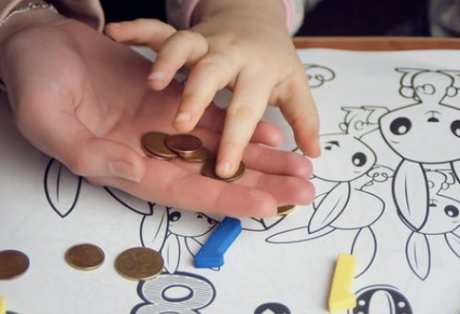
At this age, we're keeping things SIMPLE.
Your toddler doesn't need to understand your mortgage payment or know how much you have in your retirement account. But young children are already watching how the adults around them interact with money.
This is a great age to introduce the idea that things cost money and we make choices about what we buy.
Let them hand the cashier money. Talk about what you're doing at the grocery store. If they want a toy, instead of always saying "We can't afford that," try language like, "We're not choosing to spend our money on that today."
That tiny change matters.
You can also introduce saving in a way they can actually see. A clear jar with coins or dollar bills can be much easier for a young child to understand than money sitting invisibly in a bank account. Maybe they're saving for a small toy and get to watch the money accumulate until they have enough.
You're not teaching budgeting yet. You're building associations:
Money is earned. Things cost money. We make choices. We can save for things we want.
And at this age, that's plenty.
Try This Together 🤍
The Toy Savings Jar: Pick one small toy your child wants and put a picture of it on a clear jar. Let them add coins or dollars and watch their savings grow.
Grocery Store Helper: Give them two similar items and let them help you compare prices.
Play Store: Set up a pretend store at home with toys, play money and price tags. Let them practice "buying" things and counting their money.
Ages 5–10: Give Them Money to Manage

Once kids start understanding basic math, money lessons can become much more hands-on.
This is where I love introducing a simple system for spending, saving and giving.
If your child receives an allowance, birthday money or money for completing extra jobs around the house, help them decide what happens to it instead of immediately spending everything.
You might use three jars or envelopes: Spend, Save and Give.
The exact percentages aren't nearly as important as developing the habit.
This is also a great age to let kids experience small financial consequences. If your child has $20 and chooses to spend $18 on something, they now have $2 left. When they see something else they want next week, resist the urge to immediately replace the money.
That experience is the lesson.
You can start including them in everyday financial decisions too. Give them a small grocery challenge. Compare the prices of two products together. Talk about why your family is saving for a vacation instead of buying something else right now.
They don't need every detail of your finances. They just need opportunities to see healthy decision-making in action.
Try This Together 🤍
Spend, Save, Give Challenge: Every time they receive money, let them decide how much goes into each of their three jars.
Give Them a Grocery Budget: Give them $10 to choose snacks for the week. Help them compare prices and figure out what fits within their budget.
Save for Something Bigger: Choose something they really want and create a savings tracker they can color in every time they add money.
Plan a Family Activity: Give them a small budget and let them help decide how your family could use it for a fun afternoon.
Carinas Recommendation: Here is a toy that is a big hit in my home if you are looking for a place to start give this a try!
Ages 10–15: Start Preparing Them for Real Life

This is when I would start getting much more intentional.
Your child is getting closer to earning their own money, having a debit card, driving, working their first job and eventually managing expenses without you standing beside them.
Start giving them more responsibility while the stakes are still relatively small.
If they receive money regularly, help them create a basic budget. Instead of immediately telling them what they should do, ask questions.
"How much do you want to save?"
"Is there anything big you're saving toward?"
"If you buy this today, will you still have enough for what you want next month?"
You can also start introducing concepts they'll encounter as adults: checking and savings accounts, debit versus credit cards, interest, debt, taxes, investing and compound growth.
And talk about advertising!
Kids at this age are surrounded by social media, influencers and targeted marketing. They need to understand that a product appearing everywhere on their feed doesn't suddenly make it a need.
This is also a great time to talk about why your family makes certain financial decisions. You don't need to share information that feels inappropriate, but letting your kids hear healthy conversations about saving, budgeting, giving and investing can make money feel much less mysterious.
Try This Together 🤍
Give Them a Monthly Budget: Instead of paying for every small want separately, give them an age-appropriate amount to manage throughout the month.
Plan a Meal: Give them a budget, let them plan one family dinner and take them grocery shopping to purchase everything.
The 48-Hour Challenge: When they want a nonessential purchase, wait 48 hours before buying it. Afterward, ask if they still want it as much.
Introduce Investing: Choose a familiar company and show them how owning a stock means owning a tiny piece of a business. You don't even have to invest yet. The goal is simply making the concept less intimidating.
Ages 15–20: Practice Real-World Money Management
This is where the training wheels start coming off.
Teenagers and young adults may be earning paychecks, driving, paying for gas, going out with friends and making bigger purchasing decisions. Before long, they may also be navigating college expenses, rent, student loans and their first credit card.
I don't want the first time they encounter these things to be when they're completely on their own.
If your teenager gets their first job, sit down together and look at their first pay stub. Show them the difference between gross pay and take-home pay and explain why taxes and other deductions came out.
Help them create a plan for that paycheck too. Some can be spent. Some can be saved for short-term goals. And if they're earning income, this can also be a great time to start learning about long-term investing and whether something like a custodial Roth IRA or, once they're an adult, their own Roth IRA is appropriate.
This is also when conversations about credit become incredibly important.
Explain that a credit card isn't extra money. Talk about interest, credit scores, paying balances in full and why buying something with a card doesn't make it more affordable.
And before they leave home, let them see what adulthood actually costs. Talk about rent, utilities, groceries, insurance, transportation and all the little expenses they may not realize you're currently covering.
The goal isn't to scare them.
It's to make adulthood feel less surprising.

Try This Together 🤍
Decode a Paycheck: Sit down with their first pay stub and identify gross income, taxes, deductions and take-home pay.
Build Their First Budget: Have them create a monthly plan using the money they actually earn. Include saving, spending, giving and any expenses they're responsible for.
The Apartment Challenge: Find an apartment online and have them build a pretend monthly budget around it. Add rent, utilities, groceries, internet, transportation, insurance and fun money. This can be a HUGE eye-opener
.
Credit Card Practice: Give them a hypothetical $100 credit card purchase and show what can happen when only minimum payments are made versus paying the balance in full.
Open the Right Accounts Together: When appropriate, help them understand checking, savings and investment accounts rather than simply opening everything for them without explaining it.
Have Them Pay a Real Bill: If it works for your family, give them responsibility for one small recurring expense. The lesson is learning to plan ahead and make sure the money is available when the bill arrives.
Let Them Make Some Mistakes
This might be one of the hardest parts for parents.
If your 12-year-old spends all of their birthday money on something you think is ridiculous...you might need to let them.
Obviously, we're talking about safe, age-appropriate decisions. But making a $30 mistake at 12 can teach a lesson that prevents a $3,000 mistake at 22.
We don't want our children's first experience managing money independently to happen when they're living away from home with a credit card offer sitting in their inbox.
Give them opportunities to practice while you're still there to guide them.
Ask what they learned. Talk about what they might do differently next time. Then move forward.
Be Careful About the Money Messages They Hear

Our kids absorb more than the lessons we intentionally teach.
They hear us say, "We're broke."
They hear arguments about spending.
They notice when we feel guilty after buying something for ourselves.
They hear us describe someone as "rich" because they have a big house or expensive car.
None of us are going to talk about money perfectly all the time. But it's worth paying attention to the messages we're unintentionally passing along.
We want our children to understand that having more things doesn't necessarily mean someone has more money. Spending isn't automatically bad. Saving isn't a punishment. And someone's income doesn't determine their value.
Money is a resource, not an identity.
Let Them See You Learning Too
By the time your child reaches adulthood, our goal isn't for you to have made every money decision for them. It's for them to have practiced making those decisions while they still had you nearby to guide them.
And that means we have to let them make a few mistakes along the way. You don't have to have your entire financial life figured out before you can teach your children about money. Actually, I think there's something incredibly valuable about letting your kids see you learn.
You can say, "We're working on saving more this year."
Or, "We're going to wait before buying that because we have another goal we're working toward."
Or even, "I didn't learn this about money when I was younger, but I'm learning it now."
That's real life.
Your kids don't need to grow up believing their parents made every financial decision perfectly. They need to see what it looks like to make thoughtful decisions, learn from mistakes and keep moving forward.
Carina's Recommendation: Start the Conversation Early
If there's one thing I want you to take away from this, it's that financial education doesn't need to begin with a textbook.
It begins in your home.
It's the conversation in the grocery store. The piggy bank on the dresser. The first birthday money they get to manage. The purchase they regret. The first paycheck you help them divide between spending and saving.
Those tiny moments add up.
Don't focus on raising a child who always makes the "perfect" money decision. Help them become someone who knows how to pause, think and make an intentional one.
Because someday, they're going to be making those decisions without us.
And one of the greatest financial gifts we can give our kids isn't just money for their future.
It's teaching them what to do with it when they get there. 🤍