
Common Cash Flow Challenges (and How to Fix Them)
Money coming in but still feeling stressed about your finances?
You’re not alone — this post breaks down the most common cash flow challenges and how to start fixing them.
If your business made money last year but still felt stressful, you’re not imagining things. Many business owners don’t struggle with profit — they struggle with timing.
Cash flow is about when money comes in, when it goes out, and whether those two things are working together.
Instead of listing problems one by one, let’s walk through what cash flow trouble actually looks like — and how to regain control.
Signs Your Business Has a Cash Flow Problem
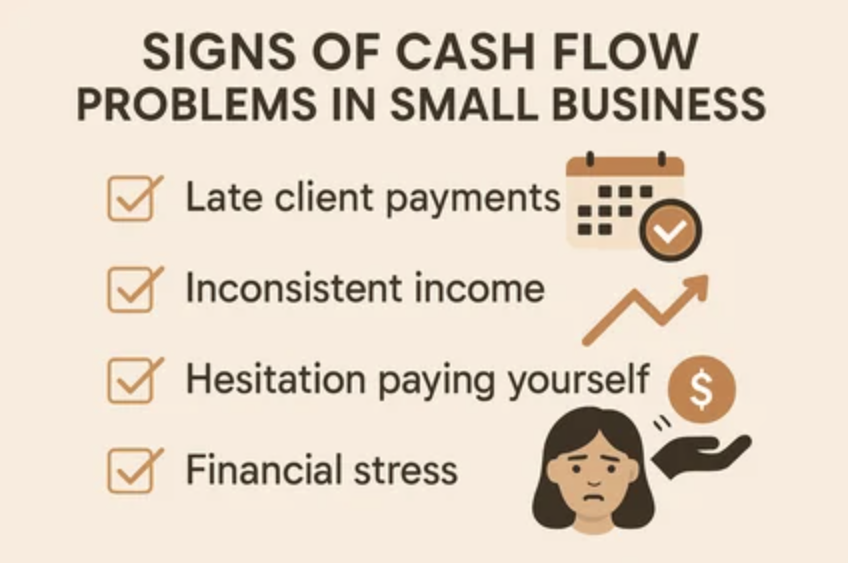
Cash flow problems don’t always show up as empty bank accounts. More often, they show up as hesitation and stress. You might find yourself second‑guessing whether you can pay yourself, relying on the next invoice to cover current bills, or feeling like one slow month can throw everything off.
.
If your business looks profitable on paper but money still feels tight or unpredictable, that’s a cash flow issue — and it’s a common one.
The Most Common Cash Flow Stress Points (and What to Do Instead)
1. Money Comes In Waves, But Bills Are Monthly
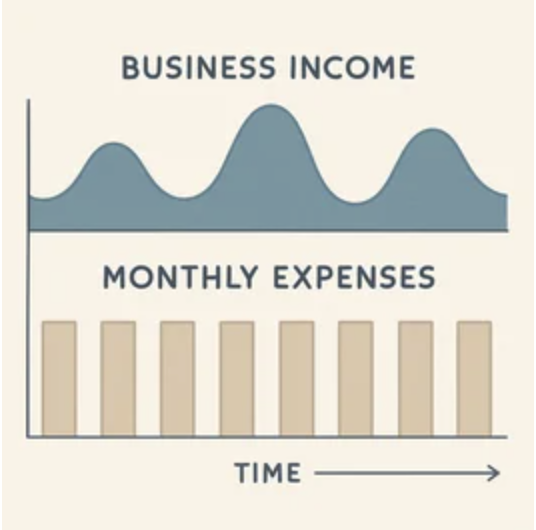
Your income may be seasonal or inconsistent, but rent, software, payroll, and taxes don’t care.
Instead of reacting month to month, the goal is to create stability. Base your spending on your lowest average month, not your best one. During high‑revenue periods, intentionally set aside cash so slower months don’t feel like emergencies. Planning for consistency, rather than optimism, creates breathing room.
2. Your Business Is Paying for Everything
Subscriptions, tools, and upgrades feel small in the moment — until they quietly pile up and start eating into your cash. Many business owners make the mistake of adding expenses before their revenue can comfortably support them, assuming growth will catch up later.
A quarterly expense check can make a huge difference. Look at each cost and ask whether it directly supports revenue, efficiency, or growth. If it doesn’t, it may be time to pause or cancel it. When money is tight, every dollar should have a clear purpose.
3. Clients Pay Late (or Whenever They Feel Like It)
Late payments don’t just hurt cash flow — they create constant stress. When money comes in unpredictably, it’s hard to plan or feel confident about decisions.
Clear expectations can change that. Setting payment terms upfront, requiring deposits or retainers, and using automated invoicing helps protect both your time and your cash flow. Being professional about money isn’t uncomfortable — it’s responsible.
4. There’s No Clear Plan for Incoming Cash
Without a plan, money tends to react instead of lead. This often shows up as scrambling to cover expenses or making decisions based on urgency rather than strategy.
A simple monthly cash flow forecast can bring clarity. Separating business and personal finances and assigning every dollar a job before the month begins allows you to stay ahead of problems instead of constantly responding to them.
What Strong Cash Flow Actually Feels Like
Healthy cash flow doesn’t mean everything is perfect. It means:
You can plan ahead
One slow month doesn’t derail you
You pay yourself consistently
Decisions are strategic, not reactive
That’s the goal — not hustle, not burnout, but control.
A February Reset for Your Business

Cash flow problems don’t mean your business is broken. They usually mean it’s growing faster than its systems. January is the perfect time to simplify, set boundaries with your money, and build a plan that supports both your business and your peace of mind. Small changes now can create stability all year long.
Cash flow stress doesn’t mean your business is failing — it means it’s time for a clearer plan. If you want help understanding where your money is going and how to create more consistency, let’s take a closer look together.