

Stay-at-Home, Part-Time or Full-Time: Finding What Works for Your Family
There are few decisions in motherhood that come with as many opinions as whether or not to work after having children. Stay home and you may wonder if you're giving up too much financially or professionally. Go back to work and you may feel guilty about the time you're spending away from your kids. Try to do a little bit of both and suddenly it can feel like you're working two jobs at the same time. The truth is, there isn't one version of motherhood that works for every family.
Your finances are different. Your career is different. Your support system is different. Your children are different. And what fills your cup as a mom is different. Only you and your family can decide what works best for your home. So instead of asking, "Which choice is better?" I want to help you ask a different question:
"What would each choice actually look like for our family?"
Because whether you stay home, work part-time or work full-time, you're providing for your family. You're just doing it in different ways.
The Stay-at-Home Mom: Providing Without a Paycheck

Let's start with something I think every stay-at-home mom needs to hear:
Not earning a paycheck does not mean you're not contributing financially to your household.
If you're caring for your children, managing appointments, preparing meals, cleaning the house, doing laundry, running errands, coordinating schedules and handling the million little things required to keep a family running, you're doing work your household would otherwise have to do itself or potentially pay someone else to do.
To put some of that into perspective, outsourcing even a few of those responsibilities can add up. Average costs can look something like:
Childcare: Infant daycare averages around $332 per week, while a full-time nanny for one child averages around $870 per week.
House cleaning: A professional house cleaning can average around $118–$238 per visit, depending on your home, location and services.
Laundry: Wash-and-fold services can run around $20–$40 per load, with pickup and delivery often costing more.
And that's before considering things like grocery delivery, meal prep, errands or additional household help. These numbers will look different for every family and every city, but they're helpful for perspective. The goal isn't to put a dollar amount on being a mom. It's to recognize that the work being done at home has real value and may also be saving your household real money.
That contribution has value, even when there isn't a direct deposit attached to it. But choosing to live on one income does require planning. Before making the transition, sit down together and look at what your finances would actually look like. How much income would you lose? How much would you save on childcare, commuting, work clothes, lunches and other expenses associated with working? Would your health insurance change? Can you continue saving for emergencies and investing for retirement?
This is also where I think those averages can be helpful. Maybe staying home eliminates a $1,400+ monthly daycare bill. Or maybe keeping your job and paying for childcare still makes the most sense because of your income, benefits, career growth and what working provides for you personally. Maybe paying for a cleaner twice a month makes working full-time feel significantly more manageable.
It's not about which option costs the least. It's about understanding the true cost of each option and deciding what's worth it for your family.
You should know what's happening with your money.
Know where your accounts are. Know what you're saving and investing. Understand your insurance coverage. Have access to household money and participate in financial decisions. And don't forget about retirement. Depending on your family's eligibility, a spousal IRA may allow a nonworking spouse to continue building retirement savings based on the couple's joint taxable compensation when filing jointly. You're still building a financial future together, even if only one person is currently bringing home a paycheck.
The Part-Time Working Mom: Creating Your Own Middle Ground

It doesn't have to be all or nothing. For some moms, working part-time creates the balance their family needs. Maybe you work three days a week and stay home for two. Maybe you freelance during nap time or after bedtime. Maybe you run your own business.
Maybe grandparents help a few days a week while you work. This option can allow you to maintain income, continue building your career and still have more time at home.
But part-time work has costs too. You might still need childcare. You may not qualify for the same employer benefits as a full-time employee. You may have commuting expenses or need help around the house because your "days off" aren't really days off at all.
So run the numbers.
What are you actually bringing home after the expenses required for you to work?
But don't stop at this month's paycheck. Staying connected to your career can help maintain your skills, network and future earning potential. If you eventually want to return to full-time work, that may matter to you. And if part-time work allows you to contribute financially while still having the flexibility you want with your children, that's valuable too. There is no rule saying motherhood has to fit neatly into one box.
The Full-Time Working Mom: Providing Through Your Career

Maybe you love your career.
Maybe your household needs two incomes
Maybe you're the primary provider.
Maybe you've spent years building a business or career you don't want to walk away from.
You do not need to feel guilty for that.
Working doesn't mean you're choosing your career instead of your children. Your career may be one of the ways you're providing for them. But full-time work often comes with expenses that need to be part of the conversation. Childcare is the obvious one, but it isn't the only one. You may pay for daycare, a nanny or after-school care. If you work from home, you may still need a nanny or babysitter because working from home and providing full-time childcare at the same time can be incredibly difficult.You may decide to hire a housekeeper, house manager or someone to help with laundry. Maybe grocery delivery becomes worth every penny. Maybe you outsource lawn care or have someone help with meal prep.
Sometimes paying for help isn't an unnecessary luxury.
Sometimes you're buying back time.
If spending $150 on help gives you several hours back to focus on work, spend time with your children or simply have a moment where you're not trying to do five things at once, that expense may provide tremendous value to your family.
The question isn't simply, "Could I technically do this myself?"
Ask:
"Is paying for this helping our household function better?"
If the answer is yes and it fits within your budget and financial goals, that can be money well spent.
Don't Compare Your Salary to Daycare Alone
I hear some version of this all the time:
"My paycheck basically goes to childcare, so what's the point of working?"
Childcare absolutely needs to be part of the calculation. It can be one of the largest expenses a family has during those early years. But I don't want you to stop the calculation there. Your compensation may also include health insurance, retirement contributions or an employer match, bonuses and other benefits. Continuing to work may also affect your future earning potential, promotions and career progression. And childcare isn't forever.
That doesn't mean working is automatically the better financial choice. It means you need to look at the entire picture before making the decision.
The same is true for staying home. Don't simply look at your salary and say, "There's no way we could afford for me to quit." If leaving work eliminates full-time childcare, commuting and other expenses, the actual difference may look very different once you put everything on paper. Run the numbers both ways.
What Does Each Option Actually Cost?
This is where I want you to get practical. Sit down with your partner and create three scenarios.
If I stay home...
What income goes away?
What expenses go away?
What benefits change?
What happens to retirement contributions?
Do we need a larger emergency fund because we're relying on one income?
If I work part-time...
What will my take-home pay actually be?
How much childcare will we need?
Will I still receive benefits?
What additional help might we need at home?
What does this option allow me to maintain professionally?
If I work full-time...
What will childcare cost?
What benefits and retirement contributions come with my job?
What work-related expenses will we have?
Would outsourcing certain household tasks improve our quality of life?
What does continuing to work mean for my long-term earning potential?
Once you have the numbers, look beyond them too.
How does each option make you feel?
What kind of support system do you have? What does your partner's schedule look like? How demanding is your career? What do you want? What does your family need right now?
Those answers matter.
Your Household Doesn't Have to Look Like Anyone Else's
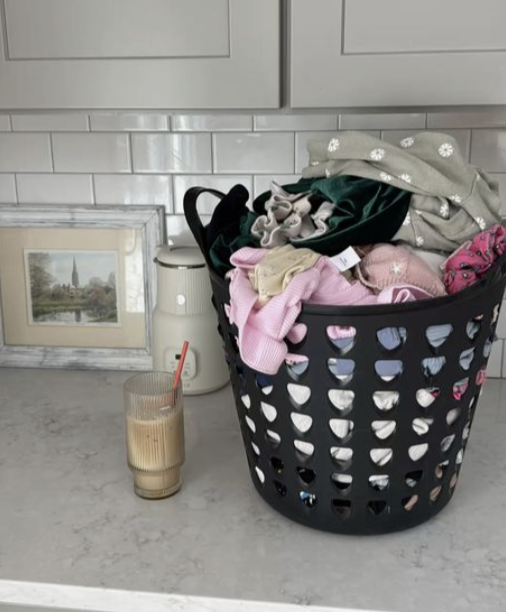
Social media can make it feel like everyone else has figured out the perfect formula. One mom is home making sourdough at 10 a.m. Another is running a company and somehow making it to every soccer practice. Another works three days a week and seems to have magically discovered the perfect balance. You're seeing pieces of people's lives.
You don't know their income, childcare situation, debt, family support, work flexibility or what happens when the camera turns off.
Don't build your family's financial plan around someone else's highlight reel.
Maybe staying home allows your household to function beautifully. Maybe working makes you a happier and more fulfilled mom. Maybe you need your income. Maybe you want your career. Maybe you work because you carry the family's health insurance. Maybe part-time gives you exactly the balance you're looking for. All of those can be true.
And You Are Not "Missing Out" by Choosing Differently
This is the part I really want moms to hear.
Every choice gives you something, and every choice requires you to give something up.
A stay-at-home mom may have more weekday time with her children but temporarily step away from a career she worked hard to build.
A working mom may continue advancing professionally and providing financially while missing some moments she'd love to be home for.
A part-time mom may get a little of both while sometimes feeling stretched between both worlds.
That's not failure. That's life. We can't choose every path simultaneously. We choose the one that makes the most sense for our family in the season we're in. And remember: seasons change. Choosing to stay home today doesn't mean you'll never work again. Working full-time today doesn't mean you'll always work full-time. Going part-time doesn't mean you can't eventually go in either direction. You're making the best decision you can with the information, resources and needs you have right now.
Carina's Recommendation: Build the Plan Around Your Family

Before making a decision this big, take the guilt out of it and put the numbers on paper. Calculate the actual costs of each option. Look at childcare, benefits, retirement, insurance, household help, commuting and your monthly cash flow.
Then talk about the things a spreadsheet can't calculate. Your time. Your stress. Your career goals. Your relationship. Your children. Your support system. Your mental load. The kind of home life you're trying to create. And please remember that providing for your family doesn't only mean earning money.
Providing can look like earning the paycheck that supports your household. It can look like staying home and taking care of the children and home while your partner works. It can look like working part-time and piecing together a schedule that gives your family a little of both. One isn't inherently better than the others.
Only you know what works best for your family and your home.
So don't feel guilty for working. Don't feel guilty for staying home. And don't convince yourself that choosing one path means you're somehow failing at the other. Make a thoughtful financial plan. Give yourself permission to adjust it as life changes. Ask for help when you need it. And build a version of motherhood that works for the people actually living inside your home. Because at the end of the day, you're all working toward the same thing:
Taking care of the people you love and building a life that works for your family. 🤍