

The holidays are supposed to be joyful, but if we’re being honest, they can also feel expensive and overwhelming. There are gifts to buy, meals to host, decorations to put up, parties to attend, school activities, travel plans, family photos, teacher gifts, matching pajamas, stocking stuffers—and somehow there is always one more thing you forgot about.
It can start to feel like your normal budget disappeared somewhere around Halloween. I don’t want you to spend the entire holiday season saying no or worrying about every dollar. But I also don’t want January to arrive with a credit card statement that makes you regret how you celebrated December.
The goal isn't to spend as little as possible. It's to know what you can comfortably spend and make intentional choices within that number.
Start With One Number
Before making your gift list or filling your online cart, figure out what you can realistically spend on the holidays in total. Not what you want to spend. Not what you spent last year. Not what everyone around you seems to be spending.
Look at your current budget, upcoming bills, savings goals and cash available. How much can you spend between now and the end of the holiday season without carrying a credit card balance or pulling money away from something more important? Maybe your number is $500. Maybe it's $1,500. Maybe it's $3,000. The number itself isn't what matters.
Knowing your number before you start spending is what gives you control.
Your Holiday Budget Is More Than Gifts
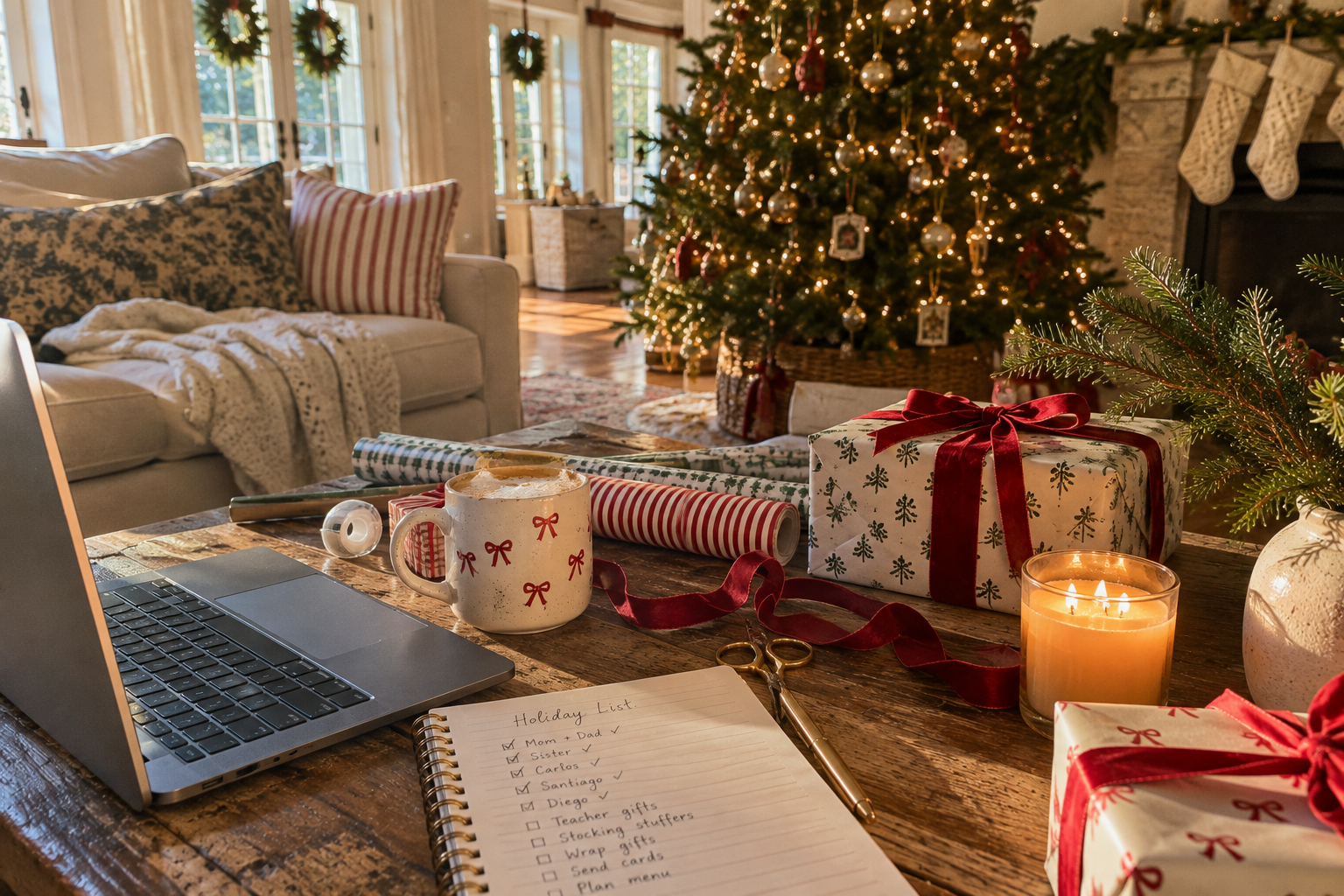
This is where I think a lot of holiday budgets go wrong. We decide how much we're going to spend on gifts and forget about everything surrounding them.
Your holiday budget might include:
Gifts for immediate family
Extended family + friends
Stocking stuffers
Teacher, coach + caregiver gifts
Decorations
Holiday cards + photos
Wrapping paper, bows + shipping
Hosting + groceries
Restaurants + holiday outings
Travel, gas + parking
Parties + hostess gifts
Holiday clothing or pajamas
School + children's activities
Charitable giving
Tips + year-end gifts
A small miscellaneous cushion
You may not need every category, and that's exactly the point. Build your holiday budget around the way your family actually celebrates.
Once you see everything together, you can decide where you want your money to go instead of wondering where it went.
What Are Families Actually Spending?
If the holidays feel expensive, you're definitely not imagining it!
According to Deloitte's 2026 Holiday Retail Survey, American households expect to spend an average of $1,654 this holiday season. Meanwhile, NerdWallet found that people planning to buy gifts expect to spend an average of $879 on presents alone.
And here's where things can get tricky. NerdWallet also found that 19% of holiday spenders expect to have credit card bills they won't be able to pay in full and on time.
Between gifts, decorations, hosting, travel, and all those little purchases that seem to sneak up on us, it's easy to see how quickly the holidays can add up.
But here's what I really want you to remember: These numbers are context, not a target. Just because another family spends $2,000 on Christmas doesn't mean you need to. Your income, family size, traditions, and financial priorities are different.
The goal isn't to keep up with what everyone else is spending. It's to figure out what you can comfortably afford and create a holiday season that feels joyful without leaving you financially overwhelmed.Build Your Budget Backward

Once you know your total number, give every category a limit.
For example, imagine you've decided you can comfortably spend $1,500 this holiday season: This isn't a budget I'm telling you to follow. It's simply an example of what happens when you start with “I have $1,500” instead of spending category by category and adding everything up afterward.
CategoryBudget: Gifts $650, Food + hosting $250, Travel + transportation $200, Activities + traditions $125, Decorations $75, Cards wrapping + shipping $75, Teacher/hostess/etc. gifts $75, Miscellaneous cushion $50, Total$1,500
If gifts are more important to your family, move money there. If you're traveling, that category may need to be much larger. If you already own plenty of decorations, maybe that category is $0.
Your budget should reflect your priorities, not anyone else’s.
Let's Talk About Guilt Spending
This deserves its own section because I think it's one of the easiest ways to overspend during the holidays.
You weren't planning to buy another gift, but someone bought something for you. Your child's friend is getting a big present. You feel like you didn't buy enough for one of your kids. Everyone else seems to be doing elaborate holiday activities. Suddenly, you're spending because you feel guilty rather than because you intentionally decided to.
Especially as moms, there can be so much pressure to make the holidays magical. But your kids don't need every activity, every decoration, every matching outfit and every item on their wish list for the season to feel special.
Before an unplanned holiday purchase, ask yourself:
“Am I buying this because I genuinely want to—or because I feel like I'm supposed to?”
That little pause can save you from a lot of purchases you never actually wanted to make.
You Don't Have to Do Everything
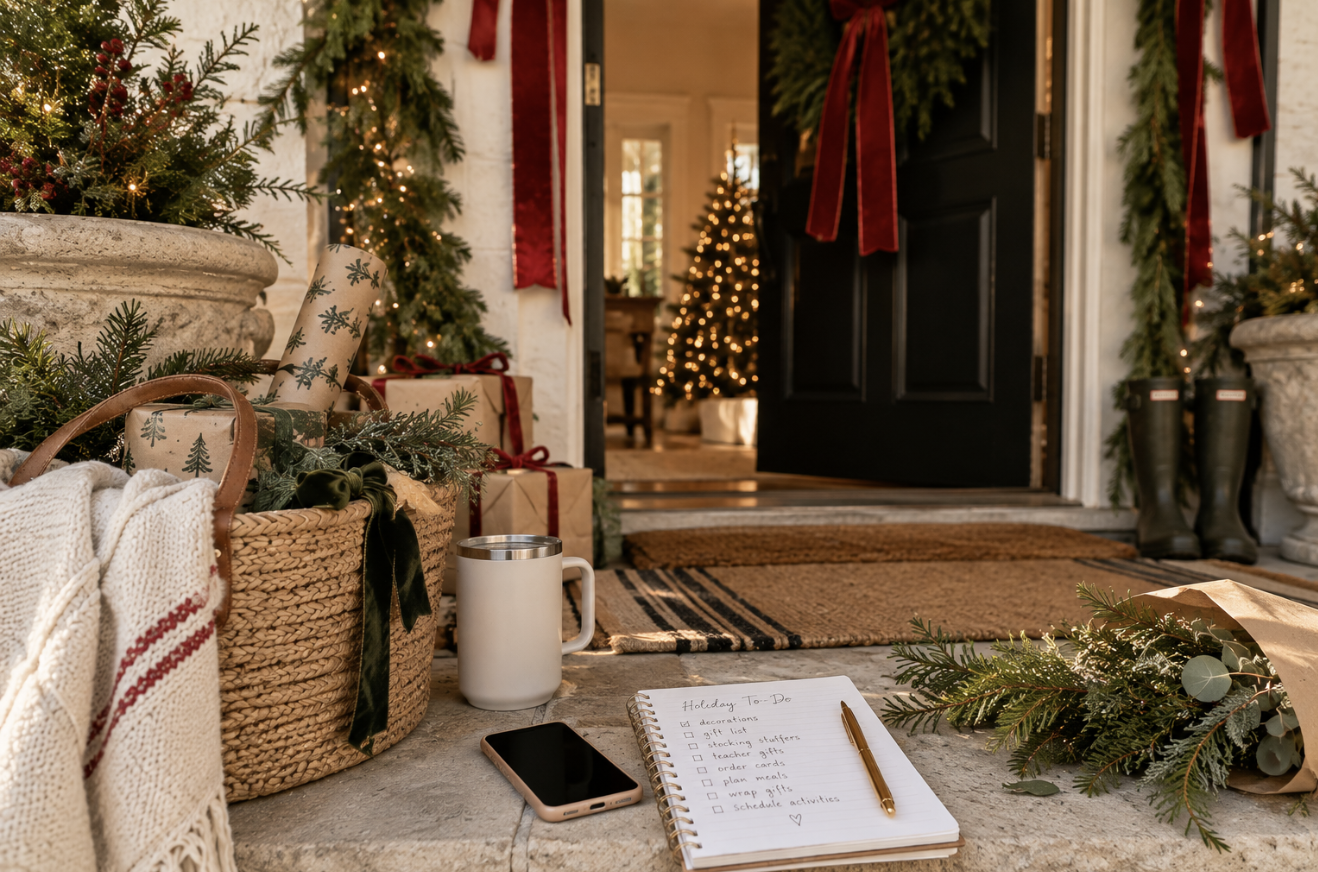
This might be my biggest holiday reminder.
Pick the traditions your family actually loves. Maybe that's decorating cookies at home, driving around to see Christmas lights, watching the same movie every year, making hot chocolate, going on a neighborhood walk, letting the kids decorate the tree, hosting a potluck or spending an afternoon making homemade gifts.
Some of the things your kids remember most may cost almost nothing. That doesn't mean you shouldn't spend money on special experiences. If seeing The Nutcracker, taking a holiday trip or having a beautiful Christmas dinner matters to your family, budget for it and enjoy it. Being intentional isn't about removing joy. It's about spending more confidently on the things that actually create it.
Give Yourself Permission to Stop
There is always another gift you could buy. At some point, you need to decide you're done.
Once you've bought what you planned for someone, cross their name off your list. Don't keep adding little things because their pile looks smaller or you saw something else they might like. The same applies to decorating, hosting and activities. Enough is allowed to be enough.
And when you've already decided what “enough” looks like before the holiday pressure kicks in, it's much easier to stick with it.
Don't Let January Pay for December
If you're using a credit card for convenience, rewards or purchase protections, I want the money to pay that bill to already exist. The holidays happen every year. They're not an emergency.

If your planned holiday spending doesn't fit into the money available, adjust the plan rather than automatically financing the difference. Reduce the gift budget, simplify hosting, choose fewer paid activities or have conversations with family about changing how you exchange gifts.
A smaller holiday you can comfortably afford is better than spending the first few months of the new year paying for one you couldn't.
Next Year, Start Earlier
If this year's holiday budget feels tight, don't beat yourself up. Use it as information. After the holidays, add up what you actually spent. If the total was $1,800 and you'd like approximately that amount available next year, saving $150 per month beginning in January would get you there. This is exactly what sinking funds are designed for.
🔗 If you'd like to make next year's holiday expenses feel a little less overwhelming, I break down how to save gradually for predictable expenses in “Sinking Funds: How to Plan for the Expenses You Know Are Coming.”
That gives us a perfect natural link back to the sinking-funds blog.
A Simple Holiday Budget Checklist
Before the season gets busy:
☐ Decide your total holiday spending limit
☐ Make a list of everyone you're buying for
☐ Set a gift budget per person
☐ List your non-gift holiday expenses
☐ Decide which traditions matter most
☐ Set aside a small miscellaneous cushion
☐ Track purchases as you make them
☐ Stop shopping when a category is done
☐ Don't use your emergency fund for planned holiday expenses
☐ Make a note of your total spending for next year's sinking fund
Carina's Recommendation
Before you buy another holiday item, sit down for 20 minutes and decide what you can comfortably spend on the entire season. Then make your list and divide that number between the things that matter most to your family. You may realize you have more room than you thought. You may realize you need to simplify a few things. Either outcome is better than spending blindly and figuring it out in January.
And once you've made your plan, give yourself permission to enjoy the money you've intentionally set aside. You don't need to feel guilty for spending it, and you don't need to feel guilty for saying no when something isn't in the plan.
A joyful holiday isn't measured by how much you spent.